

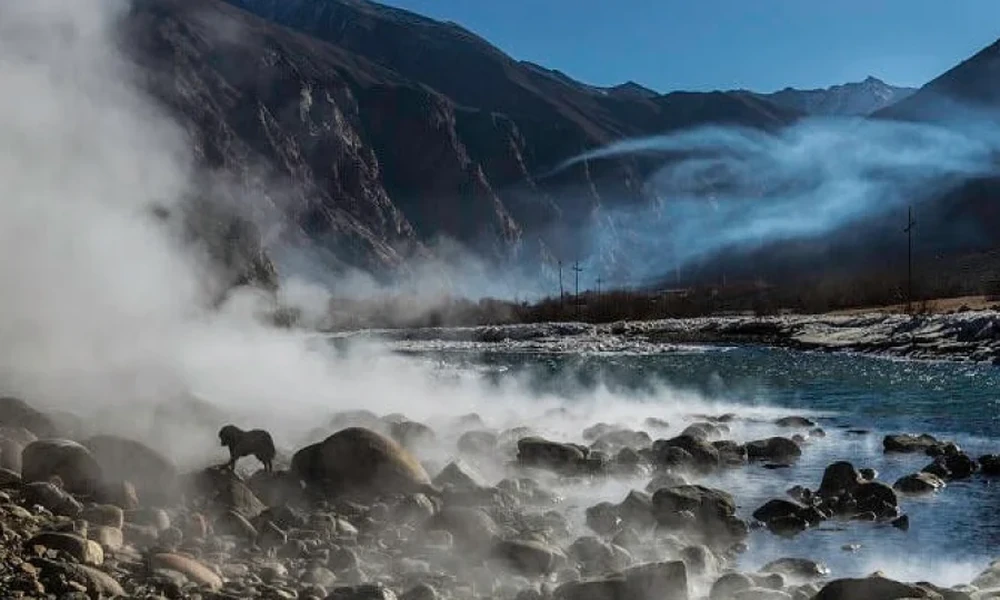
There is a particular kind of cold that gets into you in a Sikkim winter, the damp mountain kind that no jacket quite fixes. The local cure is older than any of the hotels. You find a hot spring, build a rough hut over it, and soak for as long as your skin can take. I did exactly that at Reshi one February, steam rising off the Rangeet river while frost still sat on the far bank, and I understood in about ten minutes why Sikkimese families plan whole winter trips around this.
The hot springs in Sikkim, known locally as tsachu, are sulphur-rich pools that stay warm, around 40 to 50 degrees Celsius, even when snow surrounds them. People have bathed in them for generations, less for a spa day and more as medicine, and if you time it right they are one of the most quietly rewarding things you can do in the state.
What makes Sikkim’s hot springs special
These are not developed resort baths. Most are simple: a natural spring, a stone or wooden pool, a basic hut for shelter that keeps the heat in. The water carries sulphur and other minerals, which is where the strong egg-like smell comes from, and locals have long believed it helps with skin conditions, aches, and joint pain. Whether the science backs every claim or not, the warmth after a cold day outside is real enough.
The traditional bathing season is winter, roughly December to February, and it peaks around Maghe Sankranti in mid-January, when families camp beside the springs for days at a time. That is when you see the practice as it has always been, a seasonal ritual rather than a tourist stop.
The main hot springs in Sikkim, and how to reach them
Reshi, called Phurchachu in the local tongue, is the most visited and the easiest to reach. It sits on the bank of the Rangeet river in West Sikkim, about 25 km from Geyzing (Gyalshing). There is a trekkers’ hut nearby, the pools are simple, and it draws the most pilgrims, especially in winter, who come believing the water heals skin ailments. If you only manage one hot spring, make it this one.
Borong lies in South Sikkim, roughly 30 km from Ravangla, down a steep path toward the Rangeet. The walk down is a proper effort and the climb back out is worse, so budget time and energy. The reward is a quieter, wilder soak than Reshi, with separate bathing areas for men and women in a plain shelter.
Close to Borong, about 7 km on, the Ralang hot spring sits near the well-known Ralang monastery in South Sikkim. It gets busy in February when the traditional bathing crowd arrives. Pairing Borong and Ralang across a couple of days makes a good south Sikkim plan for anyone who likes their travel earned rather than driven to.
Up north near the popular Yumthang Valley, about 140 km from Gangtok, a hot spring sits a short walk off the road across a footbridge over the Lachung river. It is a two-pool hut, the water heavy with sulphur, and it makes a warming break on the Yumthang day trip. This is high country, and the whole zone north of Lachung needs planning, which brings us to permits.
Further out sit the truly remote springs. Yumey Samdong, also called Momay Samdong, lies near the Donkia pass beyond Yumthang and stays buried in snow much of the year. Polok, in the Dzongu Lepcha reserve, needs its own special permit. These are for serious travellers with time to spare, not first-timers.
Permits and how to plan the northern springs
This is where people get caught out. The springs in the south and west, Reshi, Borong, and Ralang, need no special permit for Indian travellers, since these are not restricted zones.
The northern springs are a different matter. Yumthang and anything beyond Lachung sit in a protected area. Indian nationals need a Protected Area Permit, and the whole North Sikkim trip has to be booked through a registered local operator. You cannot drive up on your own. Foreign nationals need an Inner Line Permit for Sikkim plus a Protected Area Permit, and some zones close to the border are off limits entirely. Dzongu, where Polok lies, needs its own permit as a protected Lepcha area. Sort all of this before you leave Gangtok.
Best time to visit, and a word on altitude
For the classic experience, go in winter, December to February. The contrast of a steaming pool against snow is the whole point, and it lines up with the traditional bathing season. The western and southern springs like Reshi are open and pleasant then.
The northern springs follow the North Sikkim season. Yumthang is at its best from late March to May for the valley’s rhododendron bloom, and again in autumn. The high springs sit above 3,000 metres, so give yourself a night at Lachung to acclimatise, and take altitude sickness seriously. Do not rush from low heat straight to high cold.
Bathing etiquette and safety
- These springs are sacred to many who use them, so treat them with respect. Keep the noise down and follow the lead of local bathers.
- Do not use soap or shampoo in the pools. It fouls the water for everyone and goes against the custom.
- Most huts separate men and women, so check before you go in.
- Do not overstay in the heat. Fifteen or twenty minutes at a time is plenty. The sulphur water and the altitude together can leave you light-headed, so step out, cool off, then go back in.
- Carry your own towel, a change of clothes, drinking water, and a bag for your rubbish. Facilities are basic to non-existent.
Sikkim hot springs FAQ
Which is the best hot spring in Sikkim for first-time visitors?
Reshi (Phurchachu) in West Sikkim. It is the easiest to reach, the most established, and needs no special permit.
What is the best time to visit hot springs in Sikkim?
Winter, December to February, for the southern and western springs, with the peak traditional season around mid-January. Northern springs like Yumthang suit spring and autumn.
Are the hot springs safe to bathe in?
Yes, for short soaks. Keep each dip to fifteen or twenty minutes, avoid soap, and be careful with altitude at the northern springs.
Do you need a permit to visit Sikkim’s hot springs?
Not for Reshi, Borong, or Ralang. Yumthang and the northern springs need a Protected Area Permit and a booking through a registered operator.
How hot is the water?
Around 40 to 50 degrees Celsius, warm enough to steam even in snow.
Timing a hot spring trip around the season, the roads, and the North Sikkim permits takes local knowledge, and it is easy to get wrong from a distance. If you want a hand lining up the springs with the rest of a Sikkim itinerary, sikkimtourism.org is a Sikkim-based team who arrange these routes and permits first hand and know which springs are actually open when.
